Nelli

Web application

Nelli is a certified web-based Class IIa medical device with FDA clearance for seizure detection and characterization, enabling video and audio recordings of events to support faster diagnosis, treatment decisions, and clinical follow-up.
Role

Lead UX/UI Designer

Responsibility

Ownership of UX

Key Responsibilities
  • Led the end-to-end UX/UI process for Nelli®, aligning user needs, design decisions, and usability evidence to support MDR compliance and FDA 510(k) clearance.

  • Planned and conducted formative and summative usability tests, identifying safety-critical issues and validating compliance with regulatory usability requirements.

  • Applied IEC 62366 and ISO 14971 standards to improve usability documentation quality, risk traceability, and audit readiness.

  • Identified and documented 300+ usability risks, using them to guide design refinements that reduced potential use errors and improved clinical workflow safety.

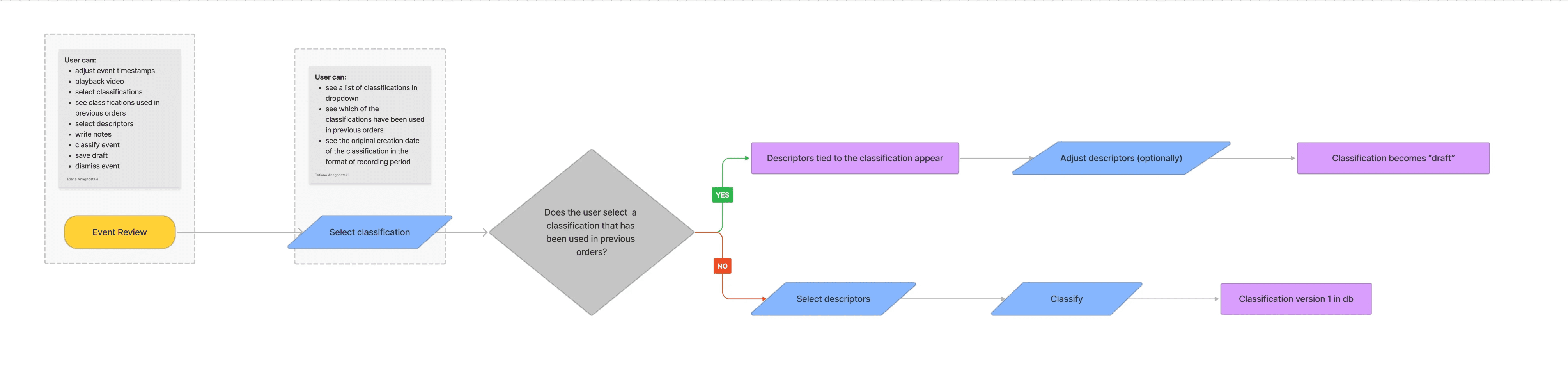
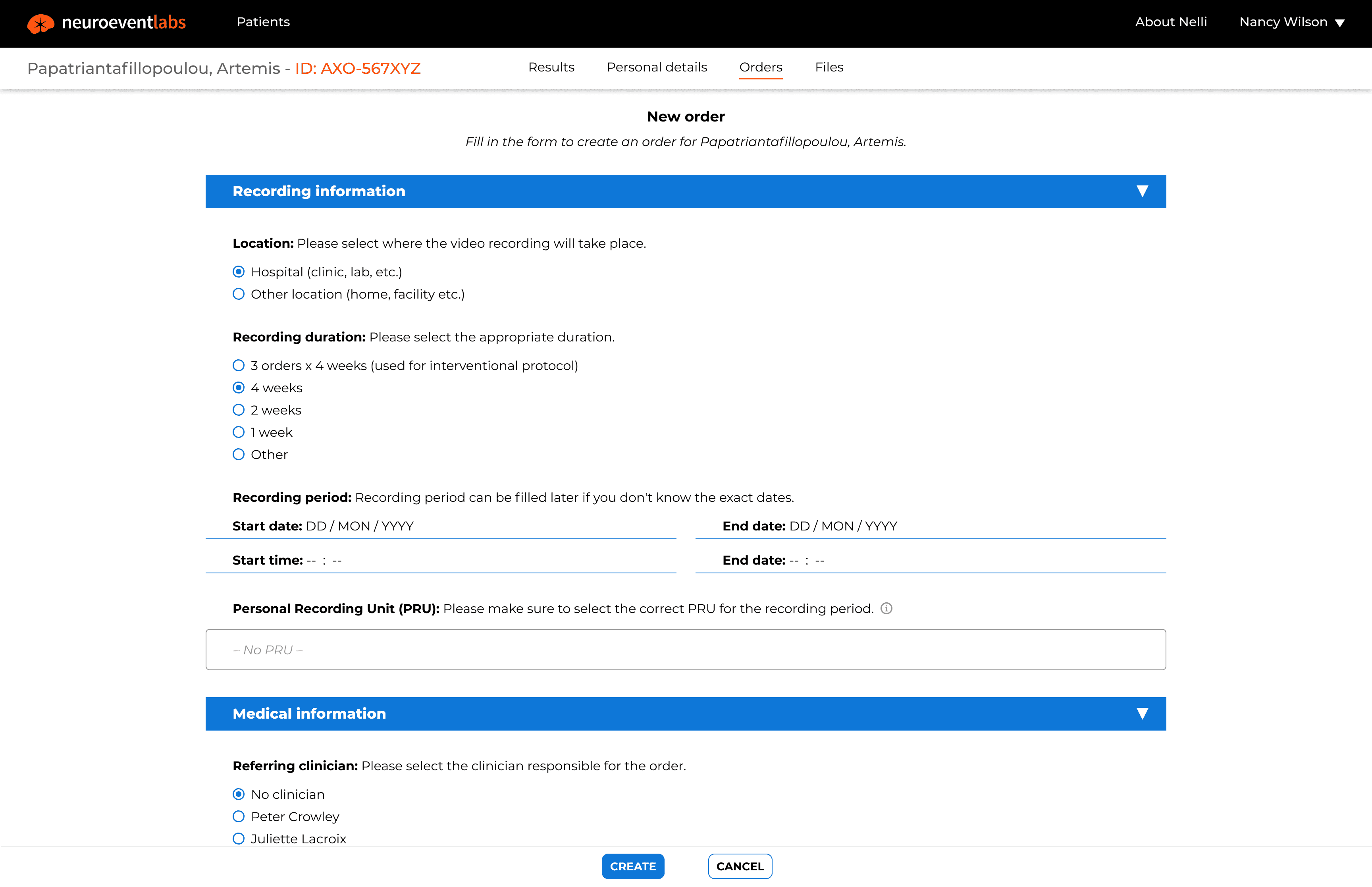
  • Designed the full web application UI, enabling more efficient clinical event review through iterative, evidence-based design updates.

  • Created 10+ personas, workflows, and prototypes to align clinical, technical, and user needs, improving development clarity and stakeholder alignment.

  • Authored usability engineering documentation (protocols, scripts, reports) used directly in MDR audits and FDA submissions.

  • Defined the company’s Human Factors Engineering SOP, standardizing usability processes and strengthening compliance consistency across development.

  • Collaborated with engineers, data scientists, clinicians, QA, and RA to ensure UI designs were feasible, clinically accurate, and aligned with regulatory expectations.

  • Supported external audits, contributing to a stronger regulatory posture.

  • Contributed to product roadmap and feature prioritization, ensuring user needs and risk controls informed development decisions.

  • Led a small development team, improving coordination, communication, and consistency in feature delivery.

Case Study 1 – Interactive Report

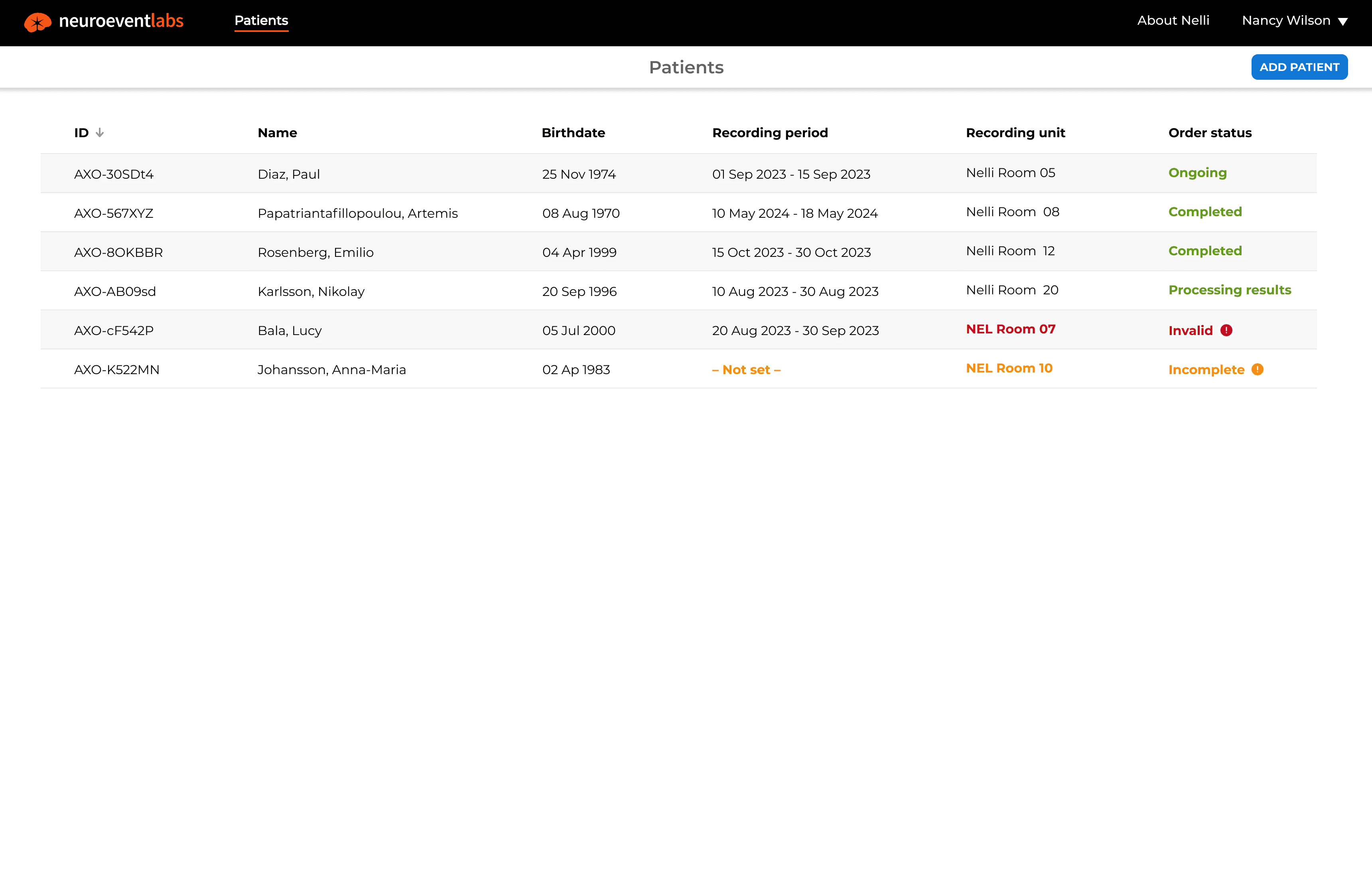
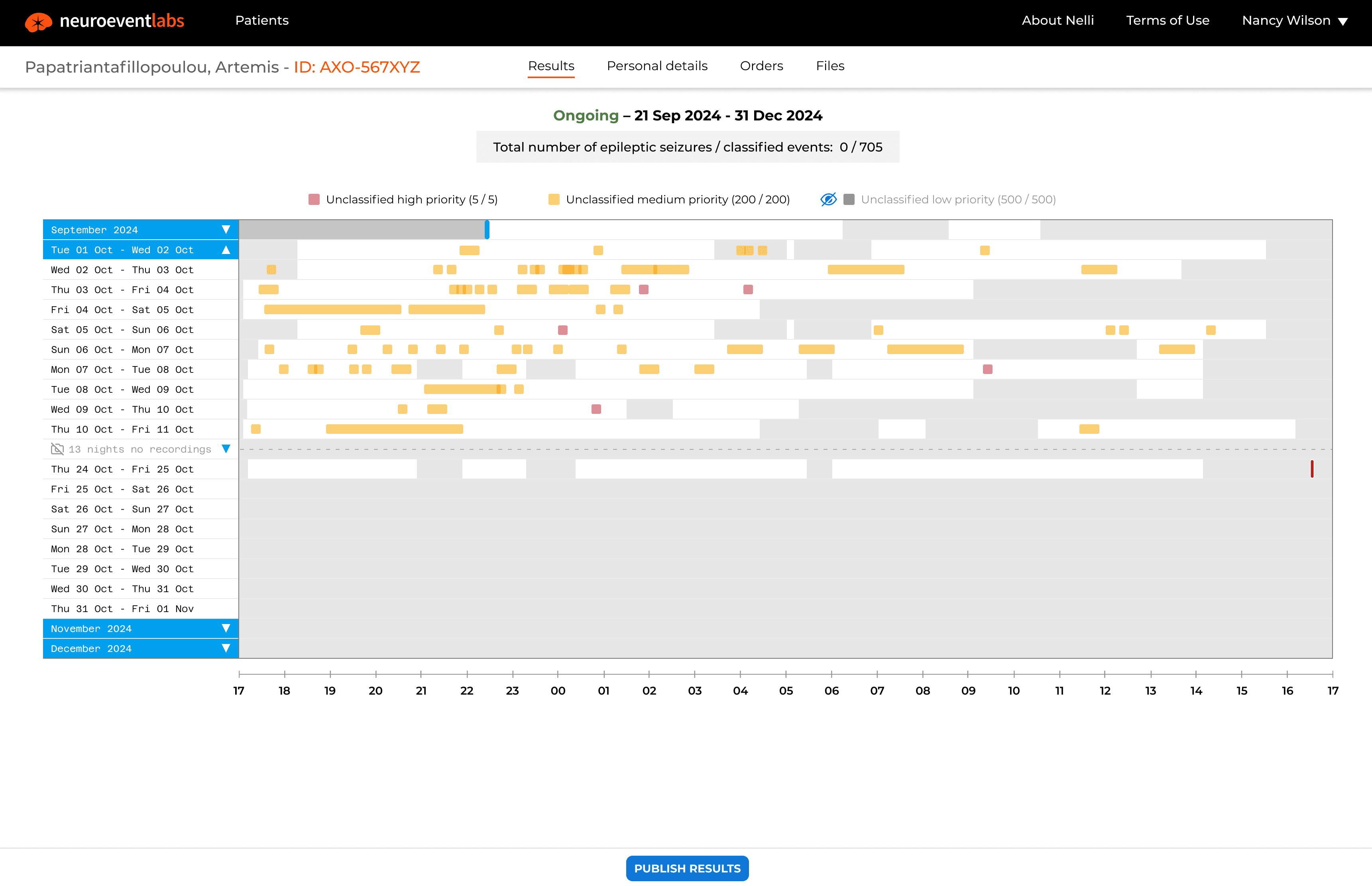
Core feature of Nelli providing visibility into recording periods, total seizure events, individualized classification types, and direct access to event videos.

Challenge

Enable doctors to access classified seizure events quickly and reliably, balancing ease of use with data security and clinical responsibility.

Use cases
  • Show the distribution of events across the recording period.

  • Provide individualized seizure classification types.

  • Present totals by event and classification.

  • Offer direct access to individual events for review.

Approach
  • Created two personas to clarify user pain points and goals for this feature.

  • Collaborated with end users to iterate quickly and streamline the clinical workflow.

  • Explored multiple design options to identify the most appropriate solution.

  • Conducted usability testing to ensure the workflow addressed user needs effectively.

  • Introduced additional functionality incrementally while preserving the core workflow.

  • Performed usability risk analysis throughout each design phase.

Impact
  • I introduced a 12-color system for 9 epileptic and 3 non-epileptic classifications, enabling clinicians to instantly recognize event types regardless of prior patient context. This classification system is now part of the design library.

  • For long recording periods, I applied progressive disclosure by expanding only the current month and collapsing the rest, reducing load time while maintaining access to relevant information.

  • I improved access to recording periods for patients with multiple orders by enabling direct selection from the patient list, reducing effort and improving navigation efficiency. This pattern is now part of the design library.

Case Study 2 – Continuous Monitoring

Experimental feature for continuous patient monitoring, developed in collaboration with the Filadelfia Epilepsy Hospital in Denmark.

Challenge

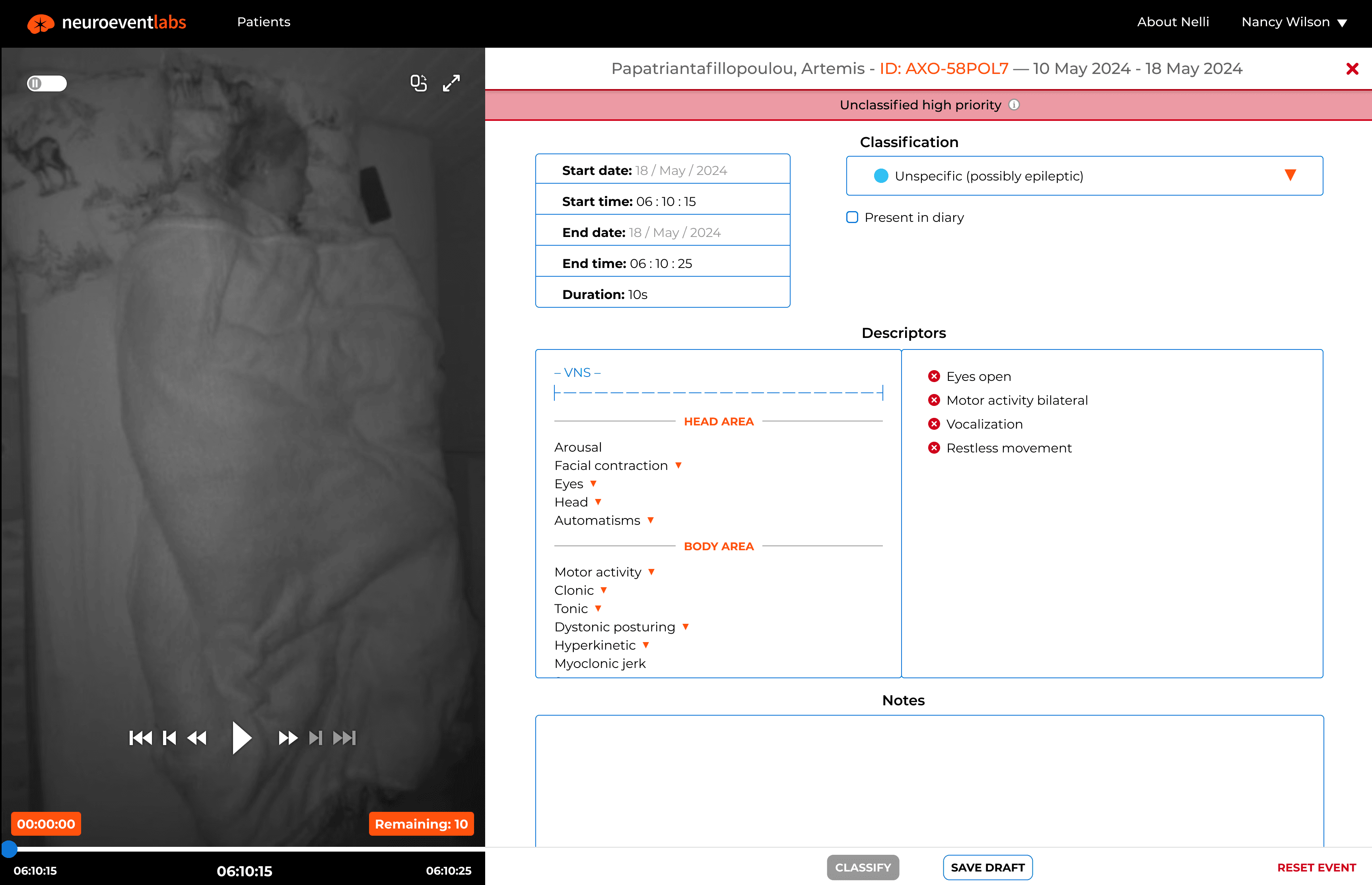
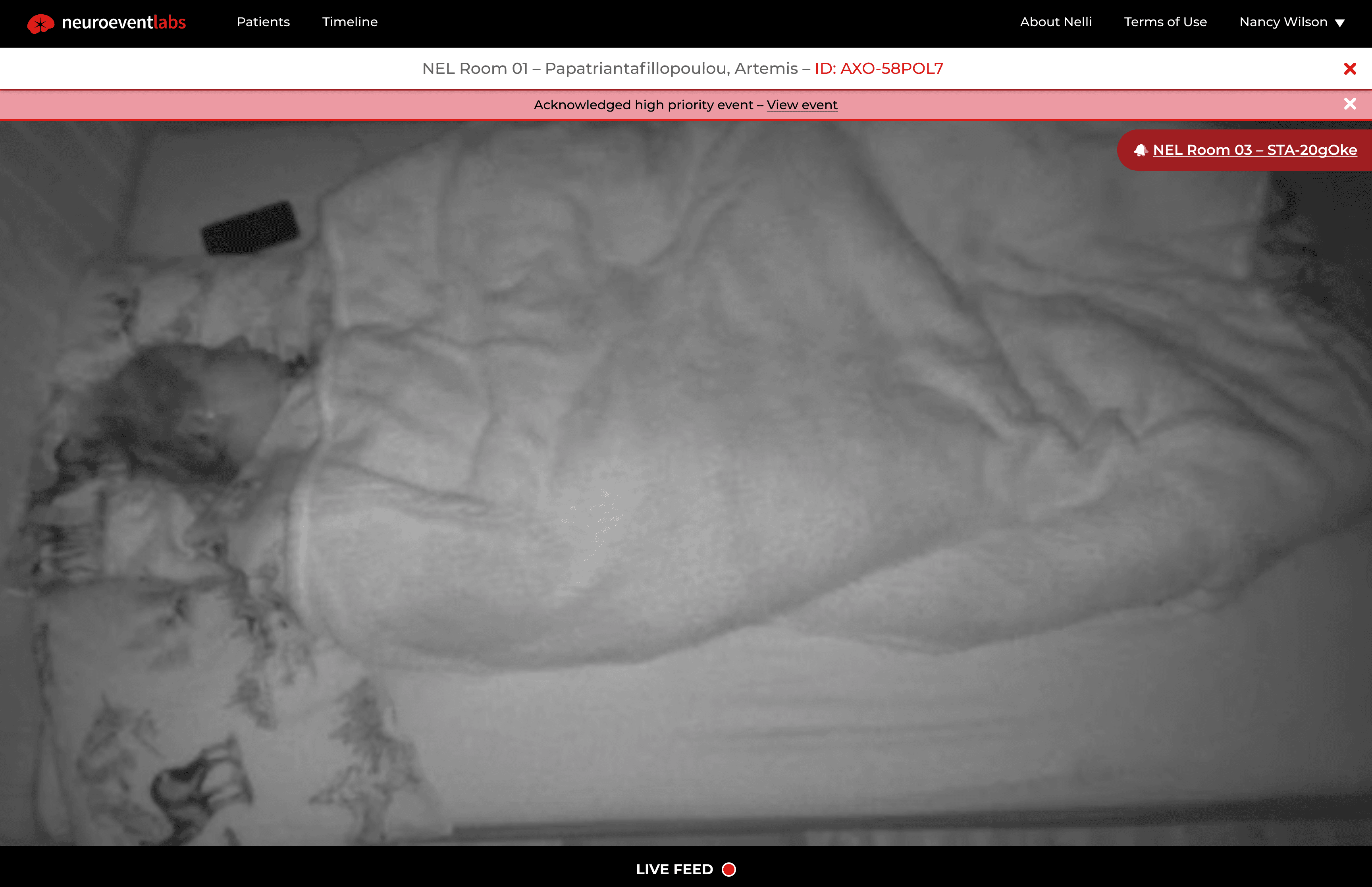
Design a hospital-specific solution for near real-time seizure monitoring with visual and audio feedback, enabling on-call nurses to respond quickly while monitoring multiple patients simultaneously.

Use cases
  • Monitor multiple patients simultaneously.

  • Surface prioritized seizure events.

  • Ensure patient safety.

  • Protect patient privacy and data.

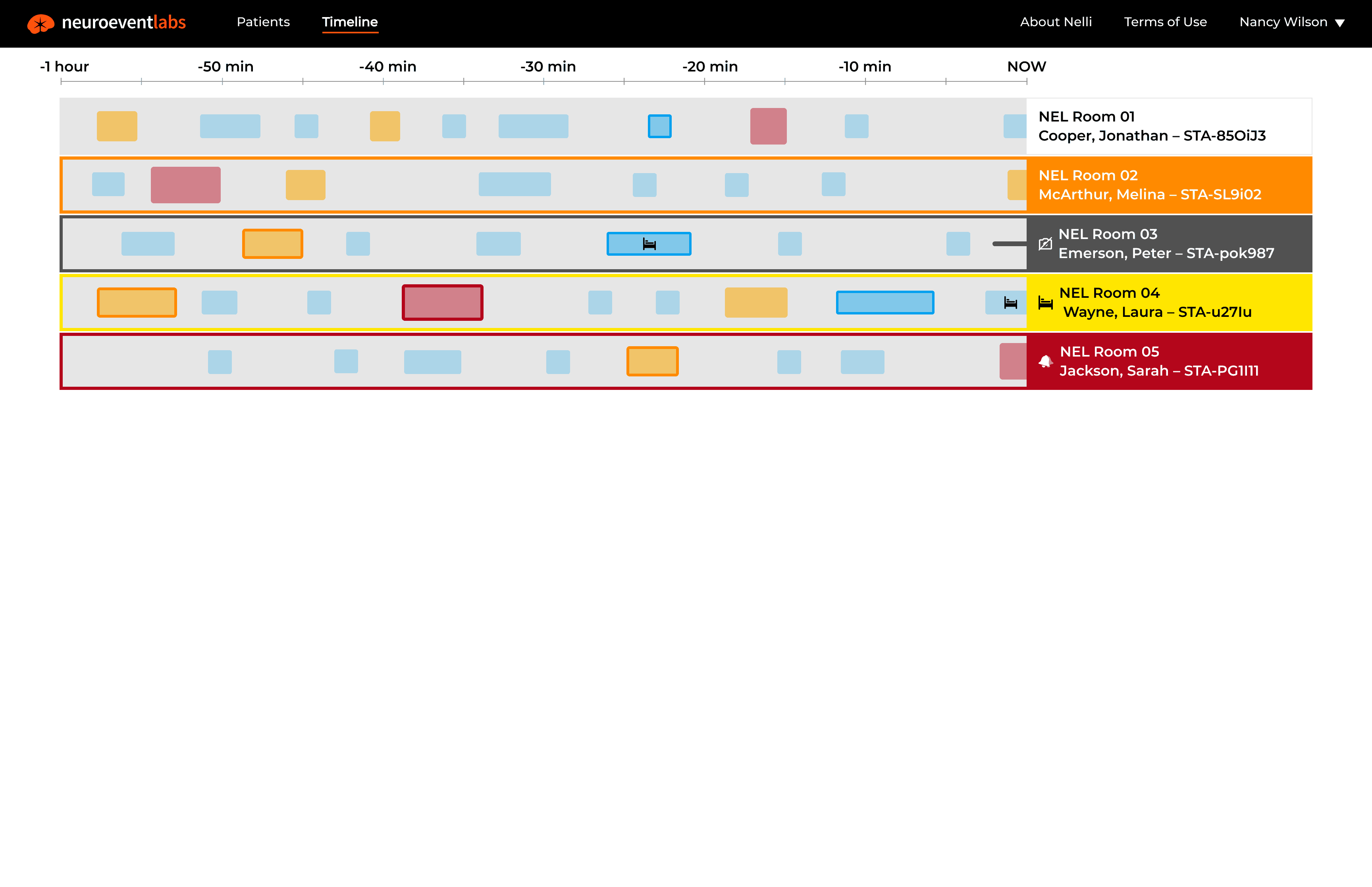
  • Detect when a patient leaves the bed area.

Approach
  • Created a dedicated persona to clarify user pain points and operational goals.

  • Collaborated closely with the client to gather and refine requirements.

  • Interviewed end users to define use cases, epics, and user stories.

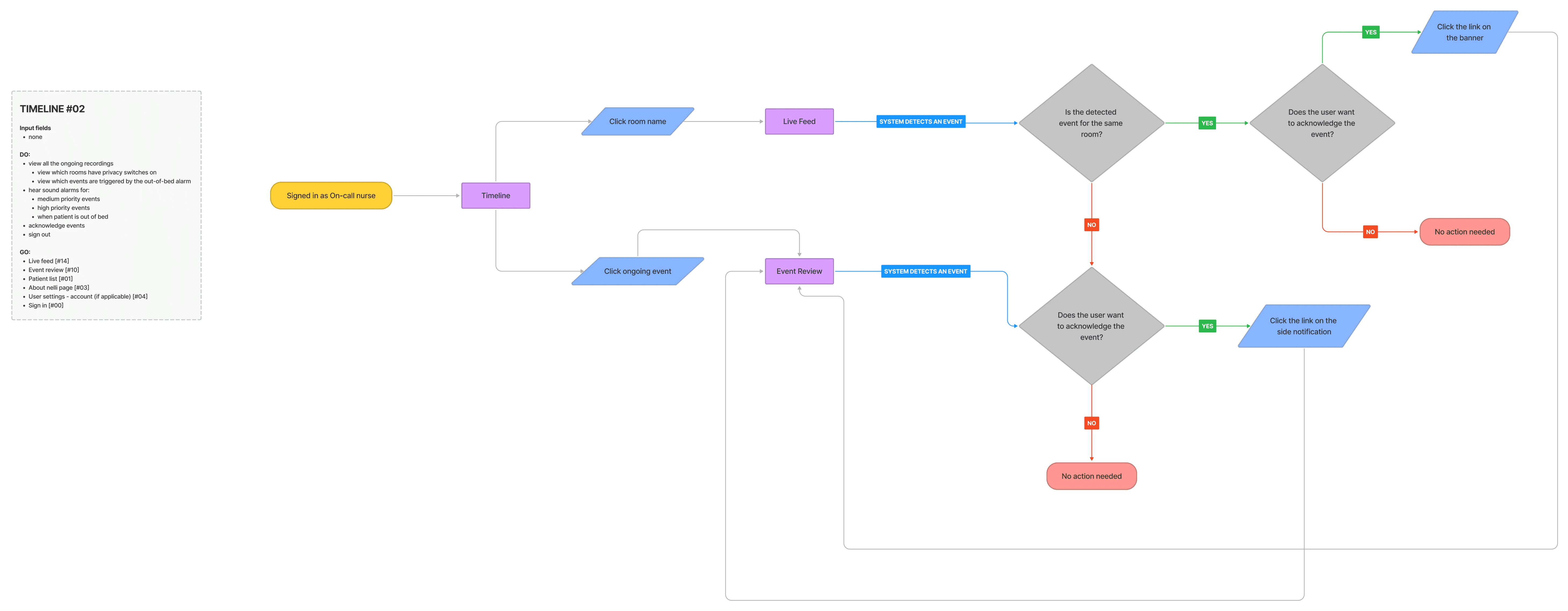
  • Designed the Timeline layout to prioritize visibility based on event priority, privacy controls, and patient location status.

  • Conducted usability testing and iterated the design based on user feedback.

  • Defined three distinct sound notifications for high- and medium-priority events and patient-out-of-bed alerts.

  • Performed usability risk analysis throughout each design phase.

Impact
  • A three-tier color system (red/orange/blue) aligned to seizure priority enabled nurses to immediately identify critical events and respond without missing seizures. This system is now part of the design library.

  • Distinct sound notifications allowed on-call nurses to stay aware of events without constant visual monitoring, supporting patient safety during high workload situations.

  • A physical privacy switch ensured recording was paused during sensitive care moments, maintaining patient dignity and data protection.

Let's connect

© 2026 Tatiana Anagnostaki. All rights reserved.

© 2026 Tatiana Anagnostaki.

All rights reserved.